Using age, breed and body type - plus why measuring matters
Feeding your dog should feel simple… but with so many food types, bag recommendations and conflicting advice online, it can quickly feel confusing. How much is too much? Is your dog getting enough? Should you feed by eye, by cup or by the guidelines on the packet?
Don’t worry - you’re not alone. At Bonnie Woof, we’re all about making everyday dog life easier, and getting portions right is one of the best things you can do for your dog’s long-term health.
Here’s a straightforward guide to help you feed with confidence.
1. Start With Your Dog’s Age
🐶 Puppies
Puppies grow fast, which means they need more calories (and more frequent meals). Most puppies eat 3–4 times a day, and feeding guidelines are usually based on their expected adult weight.
Stick to the recommended portions and adjust gradually as they grow.
🐕 Adult Dogs
Adult dogs need balanced, steady portions that match their activity levels. A dog who hikes every weekend may need more than a sofa-loving snuggler of the same size.
🐕🦺 Senior Dogs
Senior dogs often need fewer calories, especially if they’re slowing down. However, some older dogs need slightly more food if they suffer from muscle loss.
When in doubt, ask your vet to help you adjust portions gradually.
2. Consider Your Dog’s Breed & Size
Small Breeds
Smaller dogs have fast metabolisms and often need a higher calorie intake per kg than larger breeds.
Medium & Large Breeds
These dogs usually follow standard feeding guidelines, but avoid overfeeding; extra weight puts pressure on joints.
Giant Breeds
Slow and steady is key. Overfeeding can cause rapid growth, leading to joint issues later in life.
Every breed is different - from the eager Labrador (who would eat the bag AND the scoop!) to the fussy terrier - so watch your dog’s body condition as well as the guidelines.
3. Look at Your Dog’s Body Type
Most vets follow a simple “Body Condition Score” (BCS) ranging from 1 (underweight) to 9 (obese).
Here’s the simple version:
- Can you easily feel ribs but not see them? Perfect.
- Do they have a waist when viewed from above? Great.
-
Is their belly tucked up from the chest? Healthy shape.
If not, adjust portions slowly over a few weeks.
4. Why Measuring REALLY Matters
Guessing by eye often leads to overfeeding - even by 10–20% a day - which quickly adds up to unwanted weight gain.
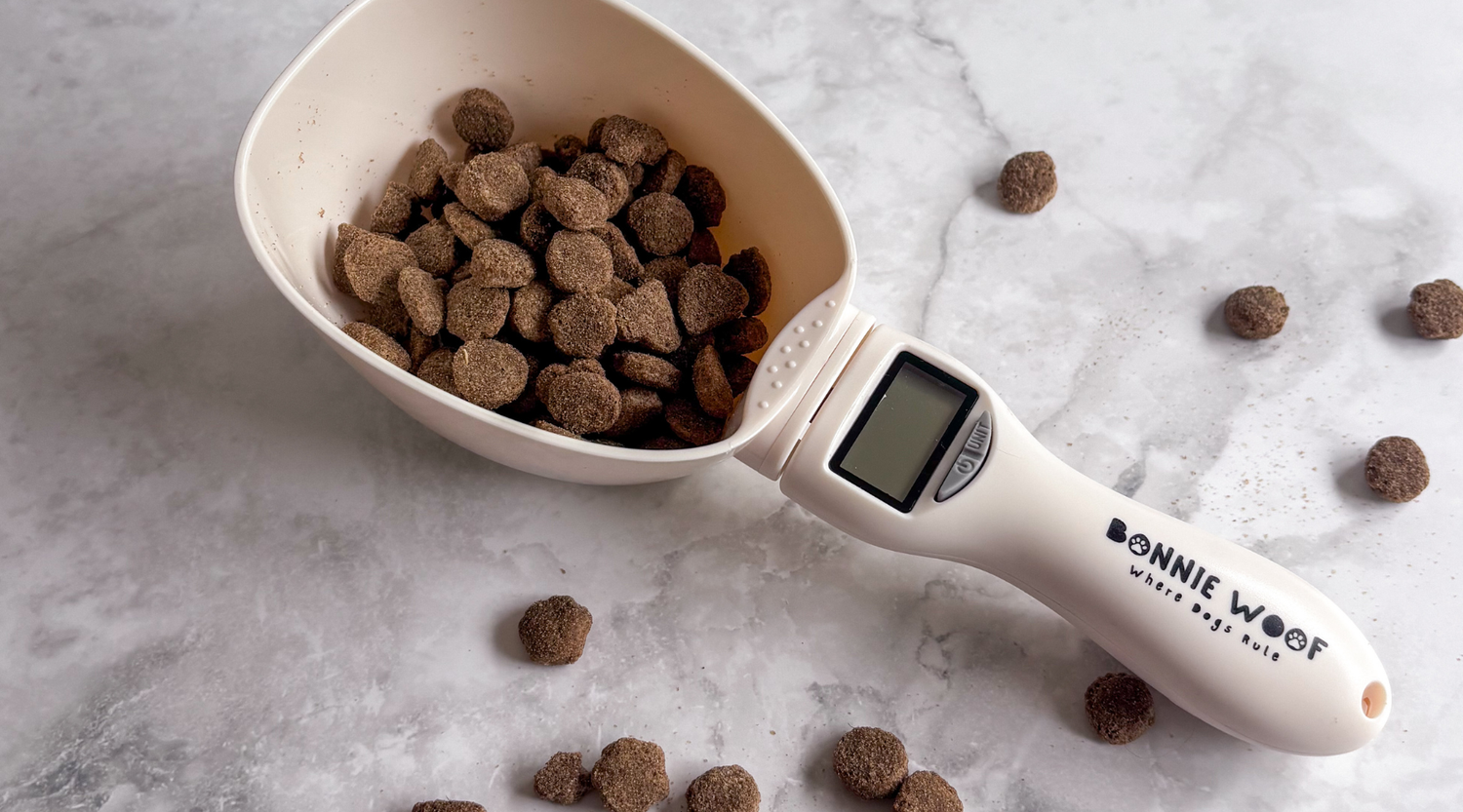
That’s why using a measuring tool (like our Digital Measuring Scoop) makes such a difference:
✨ Accurate portions every time
✨ Helps maintain a healthy weight
✨ Avoids “scooping by habit”
✨ Perfect for puppies, senior dogs and weight management
It takes seconds, but it keeps your dog healthier for years.
5. Adjust as You Go
Dogs’ needs change throughout their lives.
Activity levels go up and down.
Seasons change.
Weight fluctuates.
It’s absolutely normal to tweak portion sizes every few months.
Final Thoughts
Feeding your dog shouldn’t be stressful - and with the right tools and a little understanding, it can be simple, consistent and tailored to what your dog truly needs.
A healthy dog is a happy dog… and a well-fed dog? Well, they think that's happiness too.
If you’d like help measuring your dog’s food more accurately, explore our Digital Measuring Scoop - the small gadget that makes a big difference.


Leave a comment
This site is protected by hCaptcha and the hCaptcha Privacy Policy and Terms of Service apply.